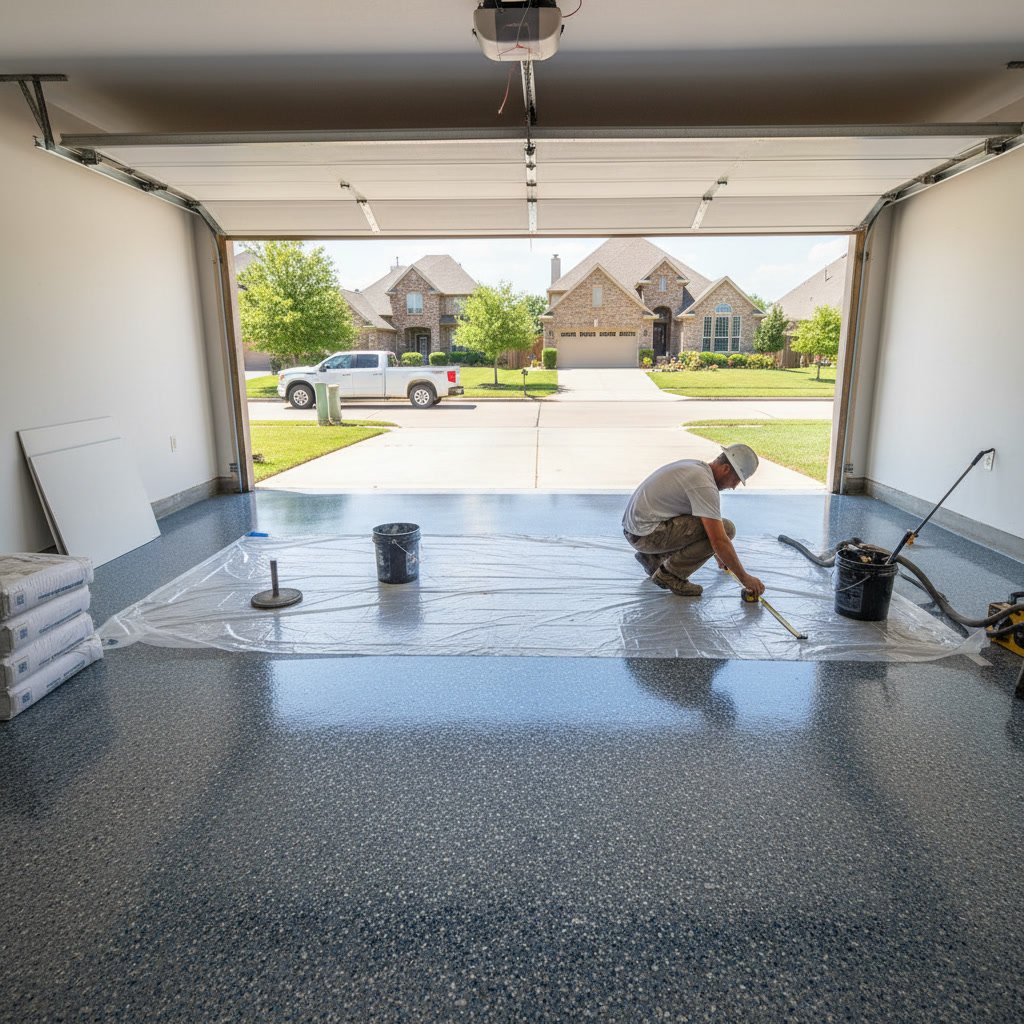
Your garage floor takes a beating every day. Oil stains, cracks, tire marks, and general wear leave concrete looking tired and uninviting. Epoxy coating offers a durable, attractive solution, but the epoxy garage floor cost often remains unclear until you start getting quotes. Most homeowners in Frisco pay between $1,800 and $5,500 for a professional epoxy garage floor installation, though your final price depends on several key factors.
This guide breaks down exactly what drives the cost of epoxy flooring, what you can expect to pay in the Frisco area, and how to evaluate quotes from contractors.
Average Epoxy Garage Floor Cost in Frisco
The typical epoxy garage floor cost in Frisco ranges from $3 to $12 per square foot for professional installation. A standard two-car garage of 400 to 500 square feet usually costs between $1,800 and $6,000, depending on the epoxy system you choose and the condition of your existing floor.
Basic single-coat epoxy systems start around $3 to $5 per square foot. These work well for light residential use but may not hold up to heavy vehicles or frequent use over many years.
Mid-grade systems with decorative chips and multiple coats typically run $5 to $8 per square foot. These provide better durability and visual appeal, making them the most popular choice for homeowners.
High-performance polyaspartic or polyurea topcoats with custom color flakes cost $8 to $12 per square foot. These premium systems cure faster, resist UV yellowing, and offer the longest lifespan.

What Affects Your Epoxy Floor Quote
Several factors determine whether your project falls at the lower or higher end of the pricing spectrum. Understanding these variables helps you budget accurately and compare contractor quotes.
Floor Condition and Preparation
The state of your existing concrete makes the biggest difference in final cost. New or well-maintained concrete requires minimal prep work, while older floors with cracks, stains, or surface damage need extensive repair.
Diamond grinding or shot blasting to create proper surface profile adds $1 to $2 per square foot. Crack repair and patching compounds add another $200 to $600 depending on severity. If your floor has previous coatings that need removal, expect to pay an additional $2 to $3 per square foot.
Garage Size and Layout
Larger garages cost less per square foot because setup and mobilization costs spread across more area. A 200-square-foot single-car garage might run $7 per square foot, while a 600-square-foot three-car garage drops to $4.50 per square foot for the same system.
Complex layouts with many corners, columns, or obstacles increase labor time and material waste, pushing costs up by 10 to 20 percent.
Epoxy System Type
Not all epoxy coatings perform the same. Water-based epoxy costs less upfront but wears faster. Solvent-based and 100 percent solids epoxy systems cost more but deliver superior adhesion and longevity.
The coating thickness matters too. A single thin coat might fail within a few years, while a proper system with primer, base coat, decorative chips, and topcoat provides decades of service. At David Dedia Construction, we recommend systems with at least 10 to 15 mils of total thickness for residential garages.
Color and Decorative Options
Solid color epoxy costs less than systems with decorative chips. Standard chip blends add about $0.50 to $1 per square foot, while custom color combinations or metallic finishes add $1.50 to $3 per square foot.
Full broadcast chip systems, where chips cover the entire surface, use more material than partial broadcast but create a more uniform, textured appearance that hides imperfections better.

DIY vs Professional Installation Costs
Big-box store epoxy kits cost $50 to $300 and promise easy application. The reality differs from the marketing. These thin, water-based products rarely last more than one to three years under normal garage use.
DIY projects also require you to rent or buy diamond grinders ($75 to $150 per day rental), purchase proper safety equipment, and invest 16 to 24 hours of labor over multiple days. Most homeowners underestimate the physical demands of surface preparation.
Professional installation costs more upfront but includes proper surface prep, commercial-grade materials, warranty coverage, and correct application technique. A professional system typically lasts 15 to 20 years compared to the 1 to 3 years you might get from a DIY kit.
When you factor in the cost of redoing a failed DIY job, professional installation often costs less over time. The upfront epoxy garage floor cost difference pays for itself through longevity and performance.
Additional Costs to Consider
Beyond the base installation, several optional upgrades and necessary extras affect your total investment.
Moisture Testing and Mitigation
Concrete slabs can transmit moisture vapor that causes epoxy to bubble and delaminate. Professional moisture testing costs $150 to $400 but prevents costly failures. If testing reveals high moisture levels, vapor barrier primers add $1 to $2 per square foot.
Cove Base
Running the epoxy coating four to six inches up the wall creates a seamless transition and makes cleaning easier. Cove base adds $3 to $6 per linear foot.
Expansion Joint Treatment
Control joints in concrete need flexible filler to prevent epoxy from cracking. Proper joint treatment adds $150 to $400 depending on your garage size.
Custom Logos or Designs
Embedding logos, sports team emblems, or custom patterns into your epoxy floor costs $500 to $2,000 depending on complexity. Simple vinyl decals cost less but may wear faster than embedded designs.
Pro Tip: Schedule epoxy installation during mild weather months. Temperatures between 50 and 80 degrees ensure proper curing. Extreme heat or cold can extend installation time and increase costs.
How Epoxy Costs Compare to Other Garage Flooring
Understanding how epoxy stacks up against alternatives helps you make an informed choice for your garage.
Interlocking tile systems cost $4 to $10 per square foot installed. They install quickly and need no curing time, but tiles can shift, trap moisture underneath, and cost as much as quality epoxy without the seamless appearance.
Polyurea coatings cost slightly more than epoxy, typically $6 to $14 per square foot. They cure faster and handle temperature extremes better, making them ideal for garages in very hot climates or those used as workshops. Many contractors now use polyurea topcoats over epoxy base coats for the best of both systems.
Stained or polished concrete runs $5 to $12 per square foot but offers no protective coating. While beautiful, these finishes stain easily and require regular resealing. Similar to other indoor and outdoor services, choosing the right material for your specific needs prevents disappointment.
Paint costs least at $1 to $3 per square foot but lasts only one to two years before showing significant wear. Hot tires lift garage floor paint quickly, making it a poor long-term investment.

Getting Accurate Quotes for Your Project
The wide range in epoxy garage floor cost makes getting detailed quotes from multiple contractors essential. Request at least three estimates and ensure each includes the same scope of work.
Ask contractors to specify the epoxy brand, type, and total thickness. Request information about surface preparation methods and whether the quote includes crack repair, moisture testing, and warranty coverage.
Beware of quotes significantly below market rates. Low bids often mean thin coatings, inadequate prep work, or inexperienced applicators. A quality installation requires skill, time, and proper materials. Cutting corners on any of these leads to premature failure.
Check contractor references and view completed projects similar to yours. Ask previous customers about the installation process, timeline, and how the floor has held up over time.
Verify that your contractor carries proper licensing and insurance. The investment protects you if something goes wrong during installation. Companies serving Frisco and surrounding areas should readily provide proof of insurance and references.
Maximizing Your Investment
Once installed, simple maintenance extends the life of your epoxy floor and protects your investment. Sweep or blow out debris regularly to prevent grit from scratching the surface. Mop with mild soap and water when needed.
Place mats under vehicles that leak fluids. While epoxy resists most chemicals, prolonged exposure to battery acid or certain harsh cleaners can etch the surface.
Avoid dragging sharp metal objects across the floor. Welding equipment, metal toolboxes, and jacks with damaged wheels can scratch or gouge even thick epoxy coatings.
Apply fresh topcoat every 5 to 10 years in high-traffic areas. This maintenance step costs far less than full recoating and keeps your floor looking new. Many homeowners who invest in house remodeling projects find that an updated garage floor significantly boosts home value and appeal.
Financing and Payment Options
Most epoxy contractors require a deposit at contract signing, typically 25 to 50 percent of the total cost. The balance comes due upon completion or according to a payment schedule for larger projects.
Some contractors offer financing through third-party lenders, spreading the cost over 12 to 60 months. Interest rates vary based on credit score and loan term. Compare financing terms carefully, as high interest can significantly increase the total cost.
Credit cards offer another payment option, particularly if you have a card with a promotional zero percent interest period. This approach works well if you can pay the balance before interest charges begin.
For homeowners planning multiple upgrades, bundling projects sometimes reduces per-project costs. If you are considering both epoxy flooring and a kitchen remodel, discuss package pricing with contractors who offer multiple services.
Frequently Asked Questions
How long does epoxy garage floor installation take?
Most residential garage floors take two to three days from start to finish. Day one involves surface preparation and repairs. Day two includes epoxy application. Day three adds topcoats and final touches. You can typically drive on the floor 24 to 72 hours after completion, depending on the epoxy system used.
Does epoxy flooring increase home value?
A professionally installed epoxy floor typically adds $2,000 to $4,000 in perceived home value. Buyers appreciate the clean, finished appearance and low maintenance requirements. The actual return depends on your local market and overall home condition, but epoxy almost always offers positive return on investment.
Can epoxy coating be applied over existing garage paint?
No, epoxy must bond directly to concrete for proper adhesion. Existing paint, sealers, or previous coatings require complete removal through grinding or chemical stripping. Attempting to coat over old paint results in rapid delamination and failure. Proper surface preparation accounts for a significant portion of the total epoxy garage floor cost but ensures long-lasting results.
What maintenance does epoxy flooring need?
Regular sweeping and occasional mopping with mild detergent keep epoxy floors looking great. Avoid abrasive cleaners or scrub brushes with stiff bristles. Wipe up spills promptly, particularly acidic substances. Most residential epoxy floors need no other maintenance for 10 to 15 years, though high-traffic areas may benefit from a fresh topcoat at the midpoint of their lifespan.
How does cold weather affect epoxy installation?
Epoxy requires minimum temperatures of 50 to 55 degrees for proper curing. Cold concrete absorbs heat from the epoxy, slowing cure time and potentially preventing proper hardening. Professional contractors use heating equipment when working in cold weather, which may add to project cost. Summer and fall offer ideal conditions for epoxy installation in Texas.
Making the Right Choice for Your Garage
The epoxy garage floor cost in Frisco reflects the quality of materials, thoroughness of preparation, and skill of installation. While initial investment ranges from $1,800 to $5,500 for most residential garages, the 15 to 20 year lifespan and minimal maintenance requirements make epoxy one of the most cost-effective flooring choices available.
Comparing detailed quotes, checking contractor credentials, and understanding what factors drive cost helps you make an informed decision. Investing in proper installation the first time prevents the frustration and expense of premature failure.
David Dedia Construction provides professional epoxy coating services throughout Frisco and surrounding communities. Our team handles every aspect of installation, from surface preparation through final topcoat application. Contact us at +12149459120 to schedule a free estimate and learn exactly what your epoxy garage floor project will cost.